Keoladeo Ghana National Park
Where is Keoladeo Ghana National Park
Despite its name, this National Park is in India, not Ghana. It is located in the north of the country, 180 km south of New Delhi.
The park is only 29 sq km and is known locally as Bharatpur, not by its official name of Keoladeo Ghana.
The park features a diverse range of habitats, including marshes, forests, and grasslands.
Why go?
Eagles, eagle, eagles!
If you want to see several species of eagles that are easy to find in this small park, this is the place for you.
The key species are the Indian Spotted Eagle, Greater Spotted Eagle, Dusky Eagle-Owl, Back-necked Stork, Asian Openbill, Indian Pond Heron, Sarus Crane, Bar-headed Goose, and the Painted Stork. Bharatpur is probably the best place in the world to see the Greater Spotted Eagle. You might also see Eastern Imperial Eagle, Steppe Eagle and Bonelli’s Eagle, Western Marsh Harrier, and Short-toed Eagle. Look for these last two species in the park’s dry areas.
Of course, there are many other species, including geese, herons, ducks, and nightjars.
Migrant species include Siberian Rubythroat, Bluethroat, Tickell’s Thrush, Orean-headed Thrush, and many warblers. Look for these species at a place called “the nursery, which is close to the gate where you pay your entrance fee.
The best time to go is from October to March. It is not unusual to see 150 species in one day during this period. The monsoon season is from July to September.
Not very much effort is required to see the masses of waterfowl, herons and cormorants on the wetlands. Look for Indian Spot-billed Duck, Lesser Whistling Duck, and Cotton Pygmy Goose, which are often mixed in with flocks of more common ducks and geese from Europe. They are relatively tame and easy to approach quite closely. The only species that are secretive and will require some effort to find are the Painted Snipe and the Black Bittern.
Short-toed Eagle
aka Short-toed Snake Eagle
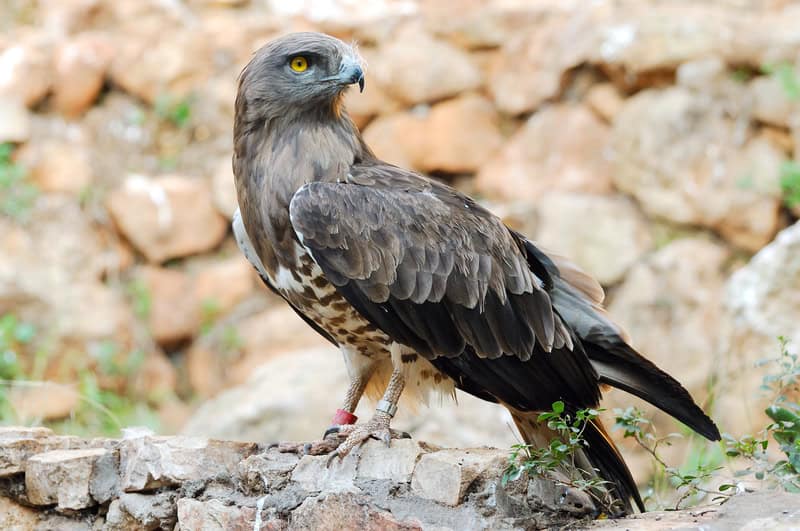
Wingspan: 162 to 195 cm (5 ft 4 in to 6 ft 5 in)
Length: 59 to 70 cm (23 to 28 in)
Conservation: Status Least Concern
Range: Part of Europe and the Middle East in their breeding season. In the non-breeding season, they migrate to a strip across sub-Saharan Africa. They are permanent residents in India.
Diet: Primarily snakes, but also includes other reptiles such as lizards, and occasionally small mammals.
Steppe Eagle
The Steppe Eagle is similar to Spotted Eagles, making ID difficult. They have a larger head and wing area than Spotted Eagles.
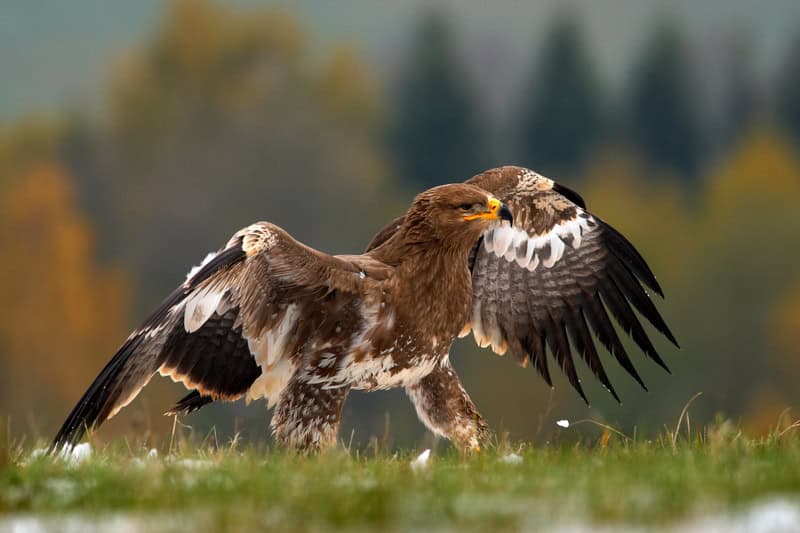
Wingspan: up to 250 to 262 cm (8 ft 2 in to 8 ft 7 in). maximum, although many are smaller.
Length: 60 to 89 cm (24 to 35 in)
Conservation Status: Endangered
Range: Asia, Middle East, India, eastern and southern Africa.
Diet: Ground squirrels and other small mammals
Eastern Imperial Eagle
The Eastern Imperial Eagle is similar to the Golden Eagle and the Spotted Eagles, making ID difficult. It has a larger head and longer neck than the Golden Eagle and Spotted Eagles.
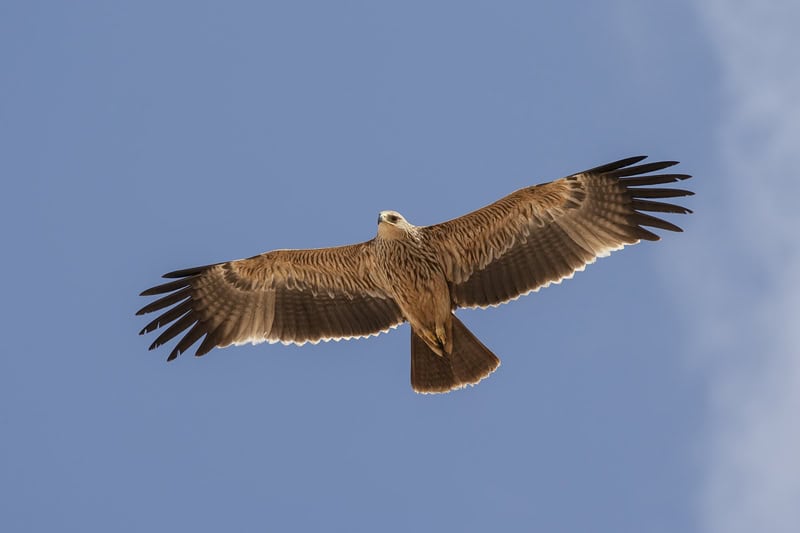
Wingspan: 1.76 to 2.2 m (5 ft 9 in to 7 ft 3 in)
Length: 68 to 90 cm (27 to 35 in)
Conservation Status: Vulnerable
Range: Asia, the Middle East and a little bit into northeast Africa
Diet: Mostly birds, but also ground squirrels and other small mammals, but will also eat reptiles and even insects.
Indian Spotted Eagle
The Indian Spotted Eagle is similar to the Greater Spotted Eagle, but it is lighter in colour.
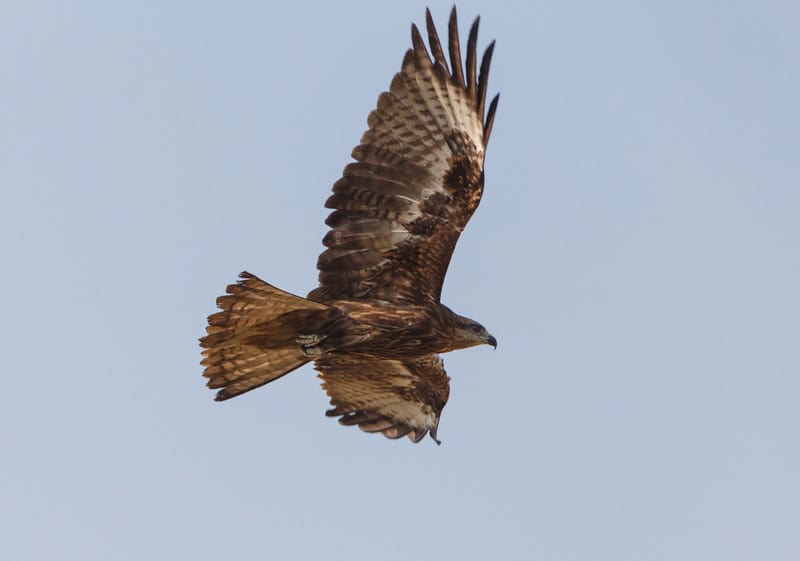
Wingspan: 150 cm (59 in)
Length: 60 cm (23.62 in)
Conservation Status: Vulnerable
Range: Mostly India, Nepal and Bangladesh with a few in Myanmar and Cambodia.
Diet: Small mammals, birds, reptiles. Occasionally, amphibians, fruit, seeds and insects.
Greater Spotted Eagle
The Greater Spotted Eagle is similar to other spotted eagles, making ID difficult. They have broader wings and are much larger in overall size.
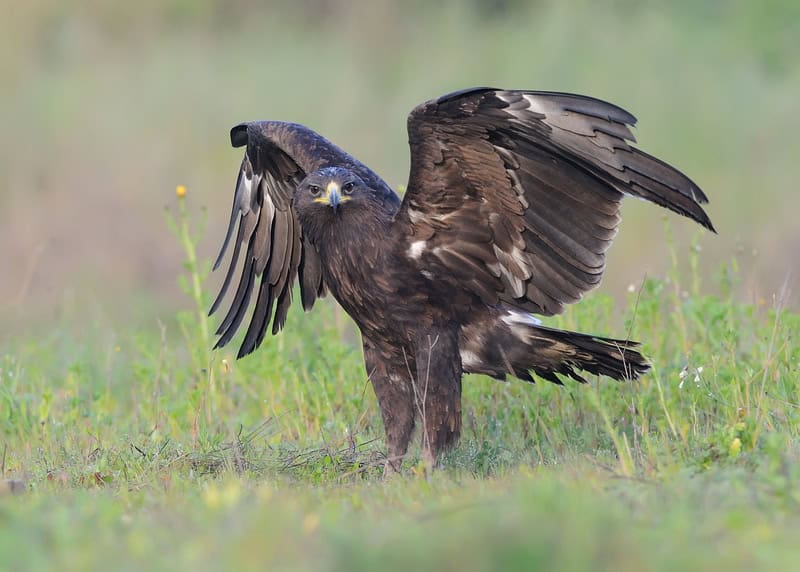
Wingspan: females 167–185 cm (66–73 in). Males are smaller.
Length: 59 to 74 cm (23 to 29 in)
Conservation Status: Vulnerable
Range: Eastern Europe and southern Russia in the breeding season. Southern Asia, the Middle East, northeast Africa and a few spots in southern Europe in the non-breeding season.
Diet: Mostly small mammals, but also birds, and sometimes reptiles, amphibians, and small snakes.
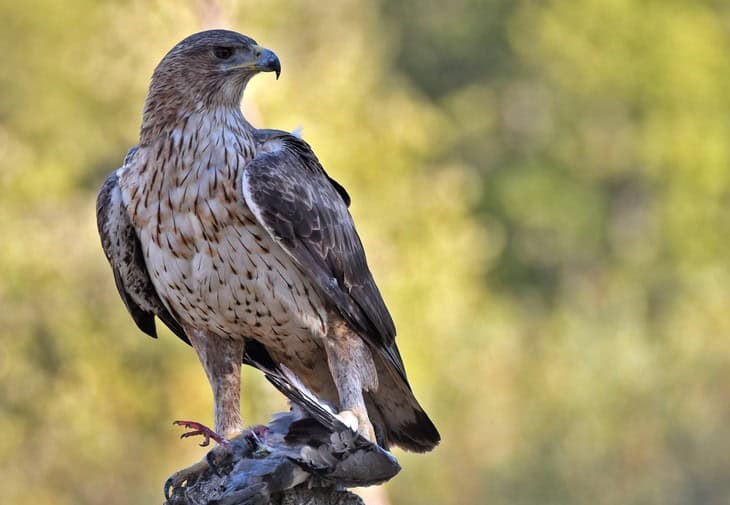
Bonelli’s Eagle
Wingspan: 143 to 163 cm (4 ft 8 in to 5 ft 4 in), with females being larger than males.
Length: 70.7 cm (27.8 in)
Conservation Status: Least Concern
Range: Mostly Portugal, Spain, northwest Africa, and India, but may also be seen in a few spots across southern Europe, the Middle East, and the coast of eastern China.
Diet: In Europe, their preferred prey is the European Rabbit, with pigeons and the Red-legged Partridge and other birds being a second choice. In other countries, birds are the main prey, including doves, gulls, gamebirds and even adult peafowl and many other species of birds ranging in size from flycatchers to herons.
Photo Credits
Short-toed Eagle by Iqor Shootov
Bonelli’s Eagle by Juan Pablo Fuentes Serrano
Steppe Eagle by Ondrej Prosicky
Eastern Imperial Eagle by Dreasmstime
Indian Spotted Eagle by Romantiche
Greater Spotted Eagle by Dreamstime
(M) Write a review
You must be logged in to submit a review.
Goa
Where is Goa?
Goa is a small state on the west coast of India. It is a major tourist destination due to its pristine beaches on the Arabian Sea. Nowhere in Goa is more than a two-hour drive from the coast.
Why Go?
Like Cancun in Mexico, most people visit Goa for its beach resorts. However, the area is rich in birdlife.
Goa Hotspots
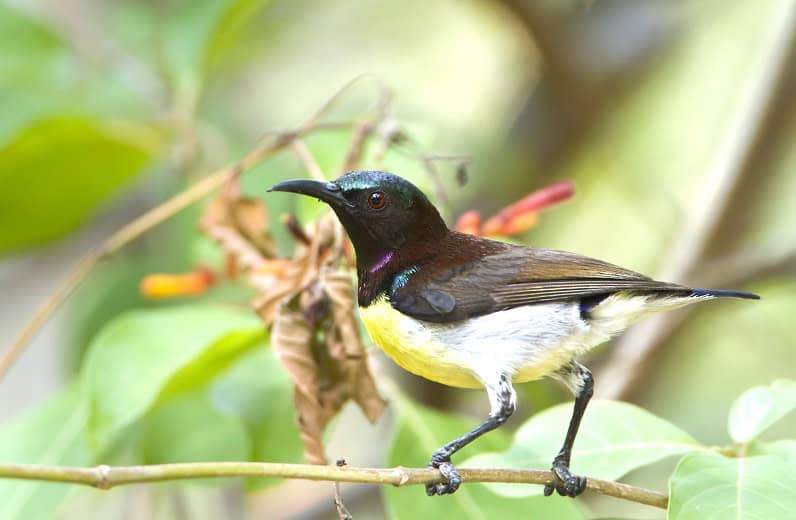
Start in the area around your hotel near the beach. There are lots of gulls and terns on the beach at high tide, but you can find many beautiful lifers around your hotel garden or along the edge of the treeline. Look for Coppersmith Barbets, Purple-rumped Sunbirds, and Asian Paradise Flycatchers.
Morjem Beach is a great spot to look for Greater and Lesser Sandplovers, as well as several species of gulls and terns. Brahminy and Black Kites circle overhead, and White-bellied Sea Eagles can be seen a bit offshore. Check any river mouth for the Terek Sandpiper.
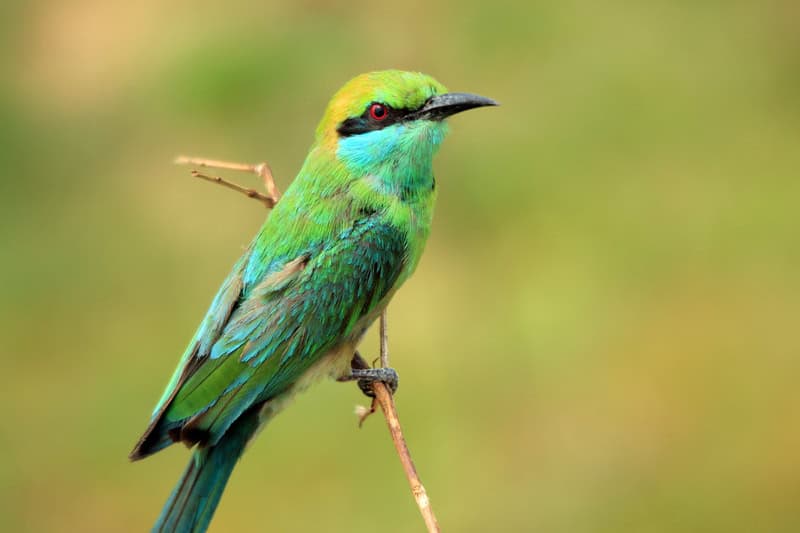
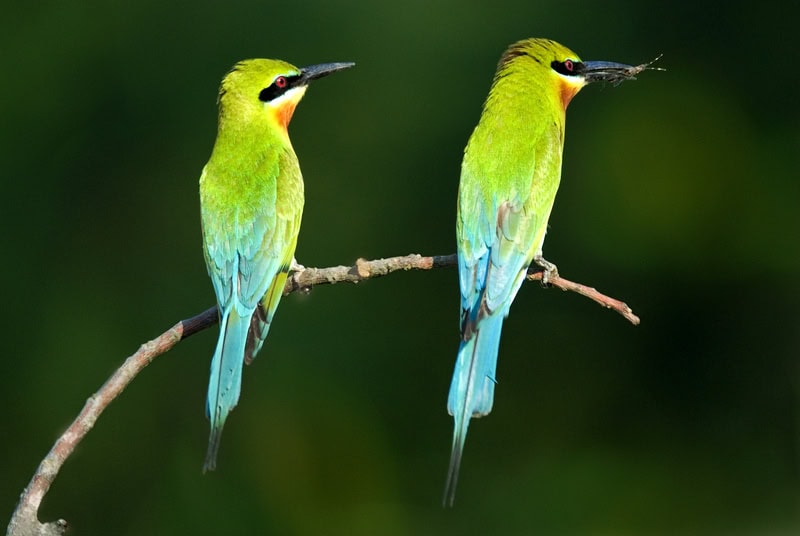
Take a cruise up the Zuari River to look for Pied, White-throated, Stork-billed, Black-capped and Collared Kingfishers as well as Asian Green and Blue-tailed Bee-eaters.
Inland, Carambolim Lake and Maem Lake support Bronze-winged and Pheasant-tailed Jacans on the floating vegetation. You will also see several species of ducks, geese, cormorants, loons, and egrets. You can also see Lesser Adjutant, Asian Openbill and Asian Woolly-necked Storks. Additionally, look for the Little Pratincole.
Check the coastal rice paddies for Richard’s, Blyth’s, Red-throated, Tawny, Tree, and Paddyfield Pipits. Besides pipits, you will probably see Plum-headed Parakeets, Golden-fronted Leafbirds, and Malabar Larks.
The Dona Paula Plateau is the place to look for Skylark, Ashy-crowned Sparrow-Lark and Eurasian Hoopoe.
Don’t neglect going into the forest. Bondla Reserve, an hour’s drive from the coast, is the best place to see Grey Junglefowl, Malabar Grey Hornbill, Bar-winged Flycatcher-shrike, White-bellied Blue Flycatcher, Scarlet Minivet, Nilgiri Wood Pigeon and Orange-headed Thrush.
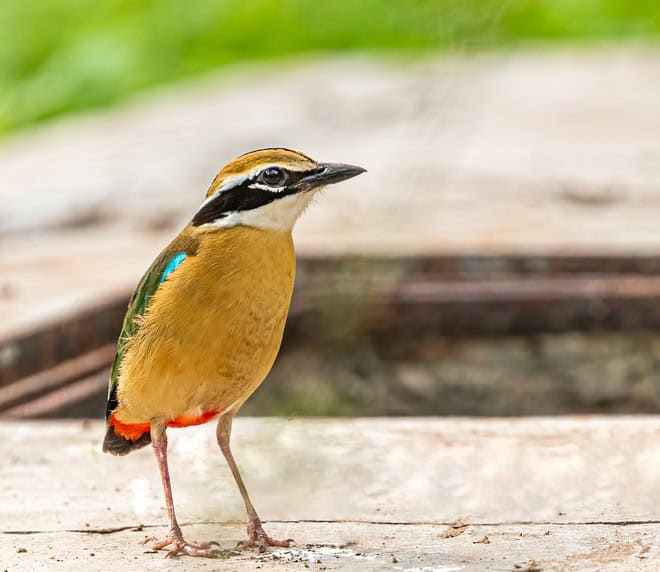
Bhagwan Mahaveer National Park is the place to look for Indian Pipit, Malabar Trogon, Sri Lanka Frogmouth, Malabar Pied Hornbill, Blue-bearded Bee-eater, Rufous-bellied Eagle, Malabar Whistling Thrush and Heart-spotted Woodpecker.
When to go.
Birding is good all year round, but is best from November to March.
Photo Credits
Asian Green Bee-eatery by Andamanse
Indian Pitta by Yadvendra Kumar
Blue-tailed Bee-eater by Karunakaran Parameswaran Pillai
Purple-rumped Sunbird by Beranqere Khadka
(M) Write a review
You must be logged in to submit a review.