Birding Hotspots Seychelles
Where is the Seychelles?
The Republic of the Seychelles is an archipelago of 115 islands in the Indian Ocean, 1,500 km off Africa’s east coast.
Why Go?
For the birds, obviously. Besides that, the Seychelles Islands are a tropical paradise of beautiful beaches, palm trees, and coral reefs for divers to explore.
The Birds
There are 18 bird species endemic to the Seychelles. That, combined with the islands’ beauty, is reason enough to go. The endemic birds are: Aldabra brush warbler, Marianne white-eye, Seychelles parakeet, Aldabra drongo, Aldabra white-eye, Aldabra fody, Seychelles black parrot, Seychelles blue pigeon, Seychelles bulbul, Seychelles fody, Seychelles kestrel, Seychelles magpie-robin, Seychelles paradise flycatcher, Seychelles scops owl, Seychelles swiftlet, Seychelles warbler, Seychelles white-eye and the Seychelles sunbird.
The Seychelles Scops Owl
The largest island, Mahe, is home to seven of these species. The Seychelles Scops Owl occurs only on Mahé Island and nowhere else in the Seychelles. It was declared extinct but was rediscovered in 1940. Look for them at Morne Seychellois National Park.
The Seychelles Magpie-Robin
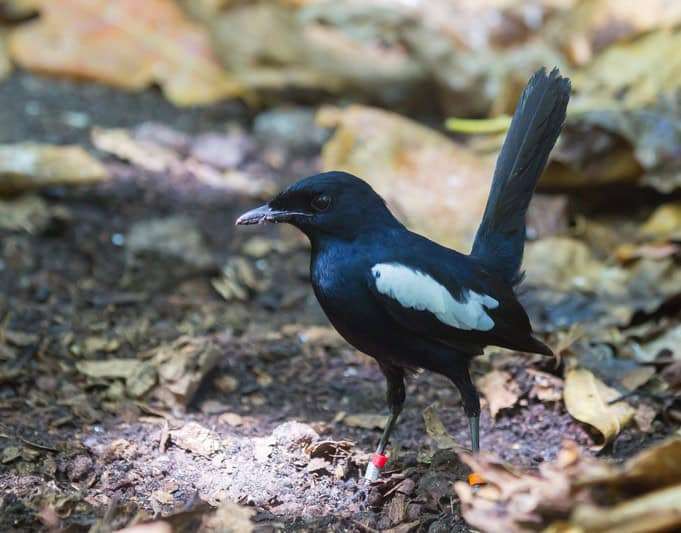
Introduced cats and rats have decimated the birds that were once common in the Seychelles. The Seychelles Magpie-Robin now exists only on the 2.19 sq km island of Fregate. In 1960, only 12 individuals remained, making it the world’s rarest bird. Cats were eradicated in 1982. The population increased to 85 by 1999. The current population is almost 500 and is was downgraded to “endangered” in 2005.. A few have been released on Cousin Island, Cousine Island, Aride Island and Denis Island.
The Seychelles Warbler
The Seychelles Warbler on Cousin Island declined to 29 individuals. In 1968, the International Council for Bird Preservation (now called BirdLife International) purchased the island. They removed the palm oil plantations and restored the island’s natural habitat. The warbler recovered, and its population is now about 3,000. Some have been relocated to Aride and Cousine Islands.
The Seychelles White-eye
The Seychelles White-eye was confined to Mahé Island, where its population was 35 individuals in 1996. It was on the verge of extinction when researchers discovered another 250 birds on the predator-free Conception Island. This shows how much difference introduced species can make.
The Seychelles Paradise Flycatcher
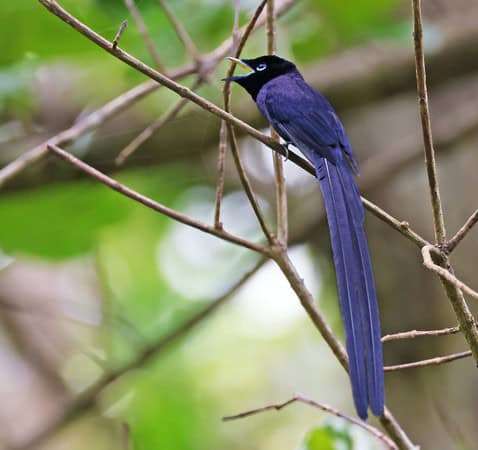
The magnificent Seychelles Paradise Flycatcher occurs only on La Digue, where the population is between 210 and 280.
The Seychelles Blue Pigeon
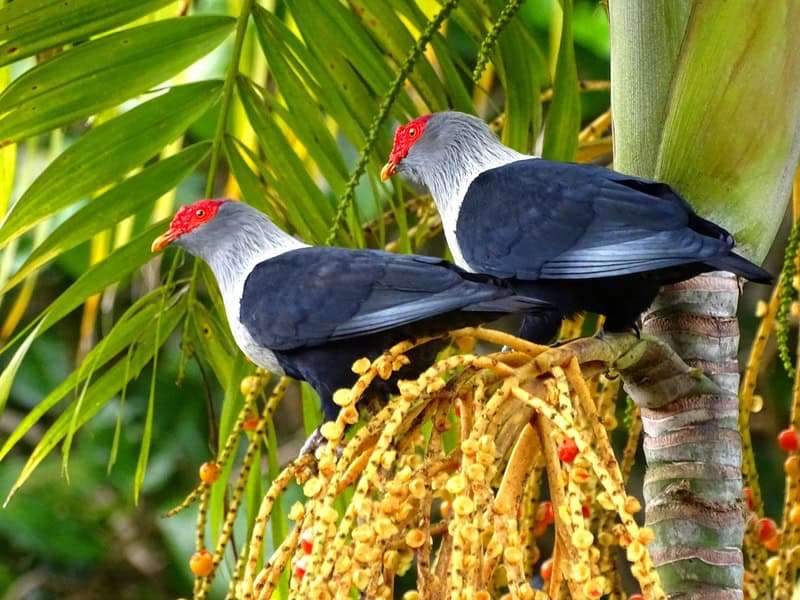
The Seychelles Blue Pigeon is not really blue. It is bluish on the wings and lower body. The neck and breast are grey, and the face is bright red. This is one of Seychelles’ endemic birds that is not in danger of extinction.
The White Tern
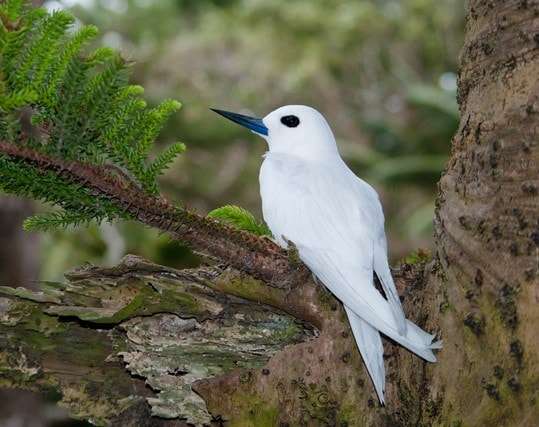
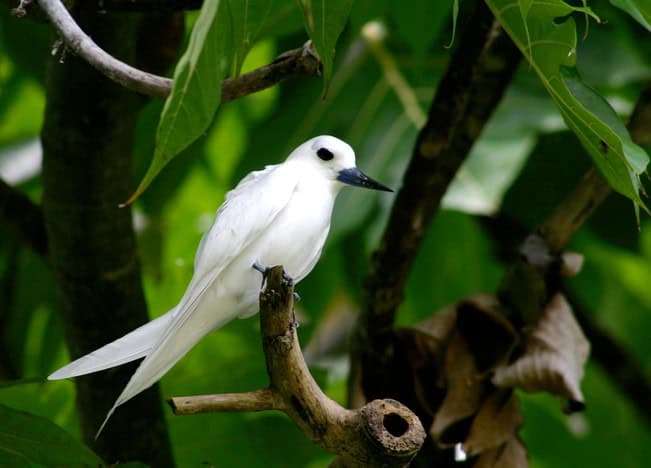
The very pretty White Tern can be found on tiny Bird Island, 100 km north of Mahe.
Aride Island
Aride Island is teeming with seabirds. There are 360,000 pairs of Sooty Terns, 200,000 pairs of Sooty Noddies, 72,000 Audubon’s Shearwaters and thousands more birds of these species arrive in the breeding season when you might seee 600,000 birds.
Other Birds
Further outstanding species to look for include the Seychelles Bulbul, Seychelles Fody, Seychelles Kestrel, and Seychelles Sunbird.
Other Wildlife
Besides the Galapagos, the Seychelles is the only other place in the world that has giant tortoises. It also has several rare and colourful reptiles, including chameleons, skinks, geckos, and tree frogs. Green and Hawksbill Sea Turtles come ashore to lay eggs. Large, fruit-eating bats, known as flying foxes, also live there.
When to Go?
July to October is best. This is when the seabirds are breeding.
Photo Credits
Many thanks to the following great photographers.
Seychelles Paradise Flycatcher by Tinamou
White Tern by Ashley Whitworth
Seychelles Magpie-Robin by Dirkr
Seychelles Blue Pigeon by Gibn59
(M) Write a Review
You must be logged in to submit a review.