Korgalzhyn State Nature Reserve
Kazakhstan Steppe
The Steppe is an area of flat, treeless grassland, much like the prairie of North America, but with different plants and wildlife.
Why Go?
The Korgalzhyn Nature Reserve is home to some species of birds that are unique to central Asia
Korgalzhyn State Nature Reserve
Kazakhstan is a large country just south of Russia. In fact, it is the world’s ninth-largest country, but it has a low population density of only six people per sq km. It is about the same size as western Europe. About 75% of Kazakhstan is desert.
While most of the steppe in Asia has been destroyed by growing towns and cities and by ploughing for farming, some of the original steppe remains.
About 160 km north of Astana, the capital city, is the Korgalzhyn State Nature Reserve. This massive reserve if 2,589 sq km.
The Birds
Although the steppe is treeless, some have been planted along the edge of highways. Check these trees for Red-footed Falcons.
On the steppe, check small bushes for Booted Warbler.
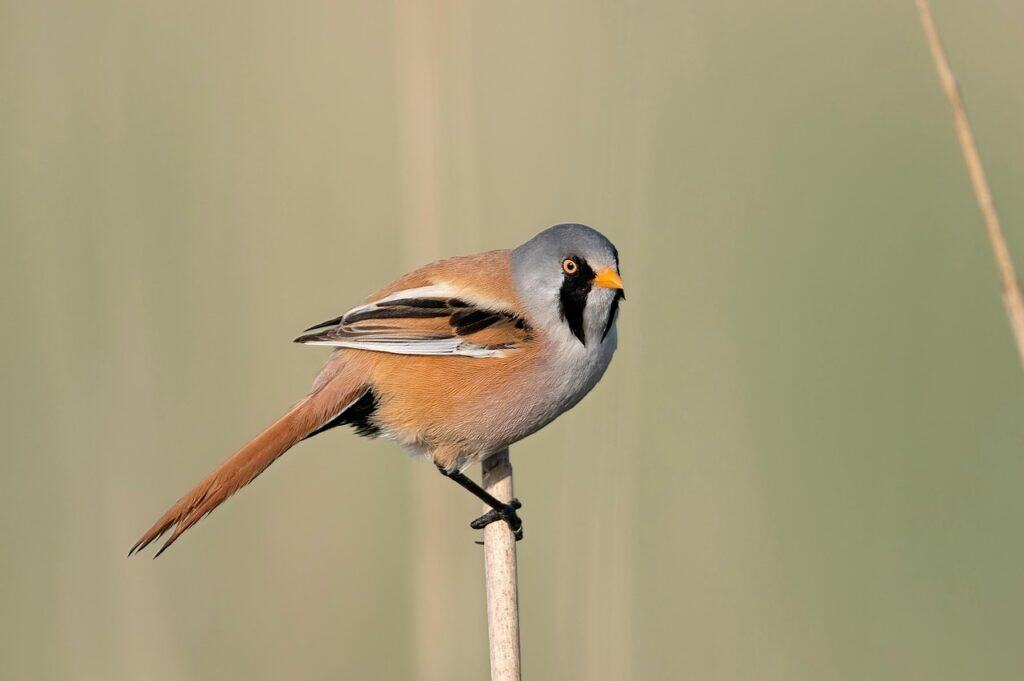
Check Lake Tengiz and other small lakes and marshes for Black-throated Loon (Diver), Greater Flamingos, White-winged Black Terns, and Black-winged Pratincole, Whooper Swans, all five species of European Grebes, the White-headed Duck, Bearded Reedlings, Eurasian Bittern, and Paddyfield Warbler
You might also see truly wild Mute Swans, far-removed from the tame ones in Europe and North America.
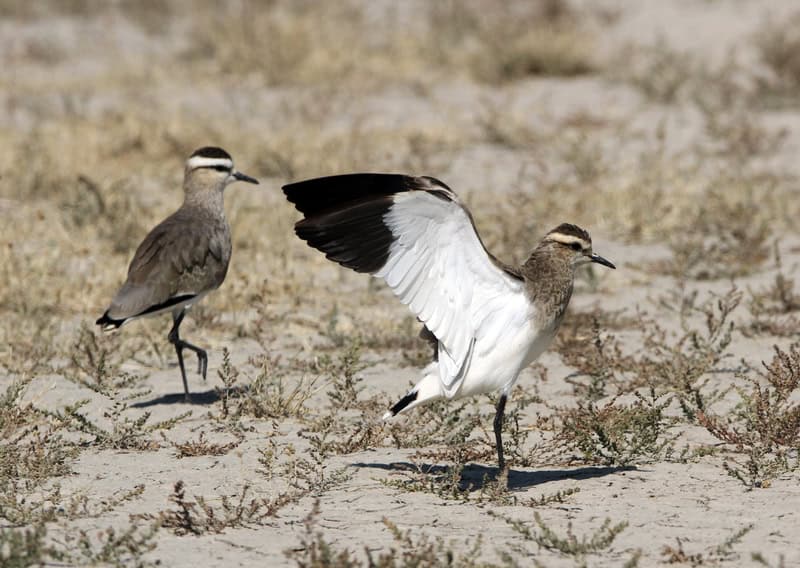
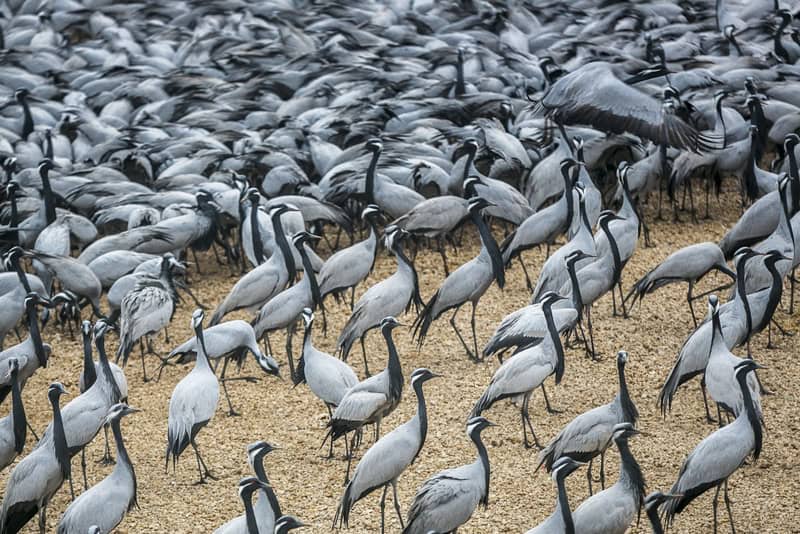
On the steppe itself, look for the Critically Endangered Sociable Lapwing. Korgalzhyn is probably the best place to observe this rare species. You can also look for Common Cranes and Demoiselle Cranes.
The Sociable Lapwing population has decreased by 95% and is now Critically Endangered. They are found in central Asia and a few in the Middle East. The population is estimated at approximately 17,000. They nest on the ground, and a major cause of their decline is the trampling of eggs by cattle. However, they are safe in Korgalzhyn. They are difficult to find, but they are there, and persistence will pay off.
Other than the rare Socialble Lapwing, the main attraction is the Demoiselle Crane. This striking bird is 76 cm (30 in) tall and has a wingspan of 155–180 cm (61–71 in).
Look for Eurasian Skylark, White-winged Lark and the Black Lark. The White-winged and Black Larks are endemic to the Steppe, with almost the entire population of both species in Kazakhstan.
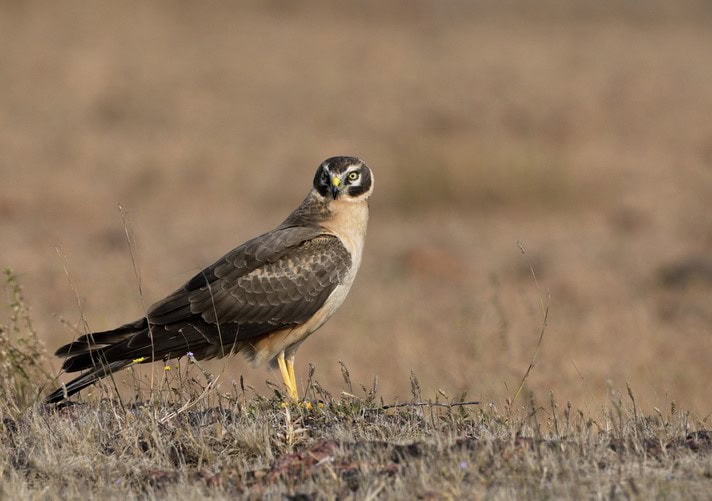
The Pallid Harrier is another great species to look for on the Steppe. You will see the Pallid Harrier hovering above the reserve. Suddenly, it will pounce on its prey, which consists of voles, Hamsters, ground squirrels and steep lemmings and sometimes small birds or insects when mammals are in short supply.
Migrating birds that do not breed here but make a stopover in Spring and Fall include Terek Sandpiper, Garganey, and Red-necked Phalarope. The Phalaropes might number in the hundreds of thousands and outnumber all other birds in the reserve for a couple of weeks.
When to Go
The best time to visit is May to July.
Photo Credits
Bearded Reedling by HenjvanDorp
Sociable Lapwing by Agami Photo Agency
Demoiselle Crane by Prabhijit Singh Kalsi
Pallid Harrier by Photocorp
(M) Write a review
You must be logged in to submit a review.