The Gambia
About Gambia
The Gambia consists of a strip of land on both banks of the Gambia River, bordered by Senegal on all sides except the Atlantic Ocean. It has an area of 11,300 square kilometres (4,400 sq mi).
It is 320 km (200 miles) long when measured in a straight line, or 80 km (300 miles) along the river. The width is from 10 to 50 km (6 to 31 miles).
The Gambia
The country is officially called “The Gambia” to distinguish it from Zambia, as the two names sound similar.
The Birds
Rollers, weavers, Glossy Starlings, and sunbirds are common and can be found in most hotel gardens.
The Egyptian Plover
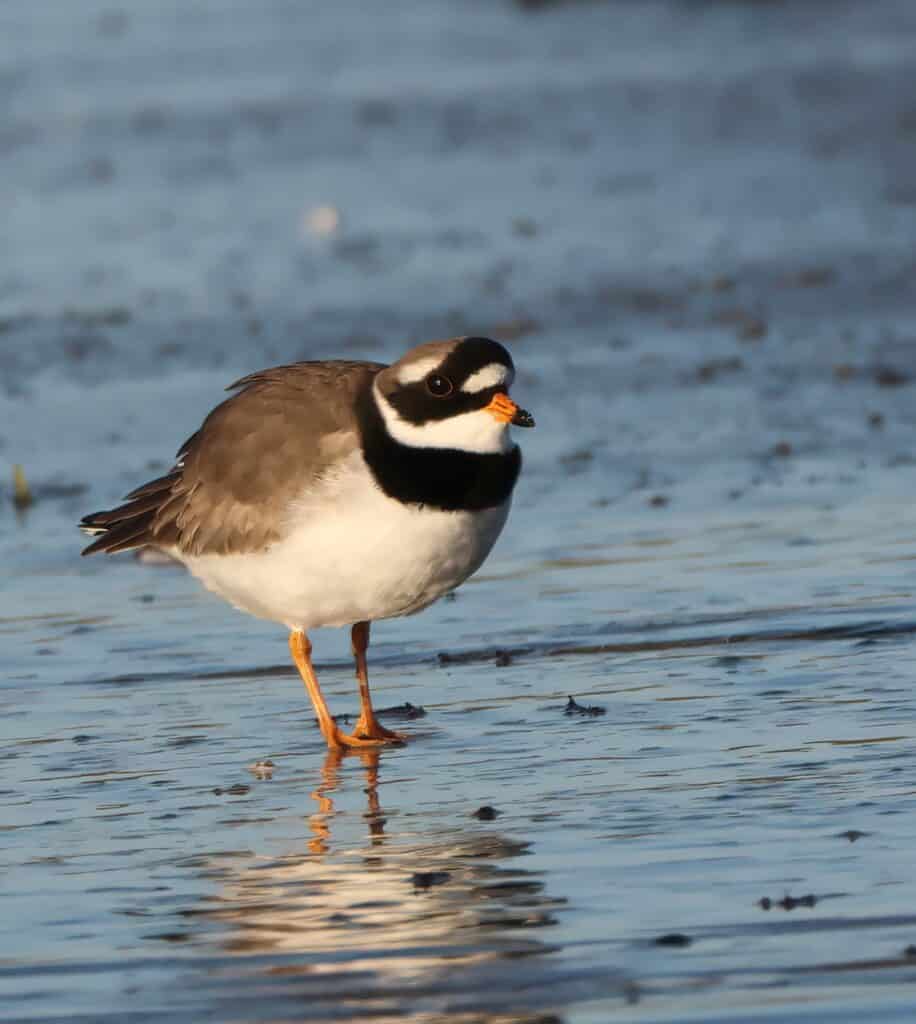
Despite its name, the Egyptian Plover is not found in Egypt. Its range is in sub-Saharan Africa, and The Gambia is one of the best places to see it.
Getting Around
There are two main roads in The Gambia, one on each side of the river. They are called the North Bank Road and the South Bank Road. There is a bridge at the far eastern end of the country near the village of Fatoto.
The Trans-Gambia Highway runs from Kaolack in Senegal to Ziguinchor also in Seegal. Very little of the highway is in Gambia, but it crosses The Gambia and the Gambia River, which is why it is called the Trans-Gambia Highway. It crosses the river at Farafanni, about 100 km inland It does not run the length of Gambia as the name implies.
Other than the two bridges, there are several ferries, one of which is located at the coast in the capital city of Banjul.
You can hire a taxi in Banjul. Make sure you get a 4WD vehicle. The road is good most of the way except near the village. Negotiate the price before you enter the vehicle. Alternatively, you can rent a vehicle from AB Rent a Car on the Bertil Highway in Banjul.
Suggested Route
First Stop
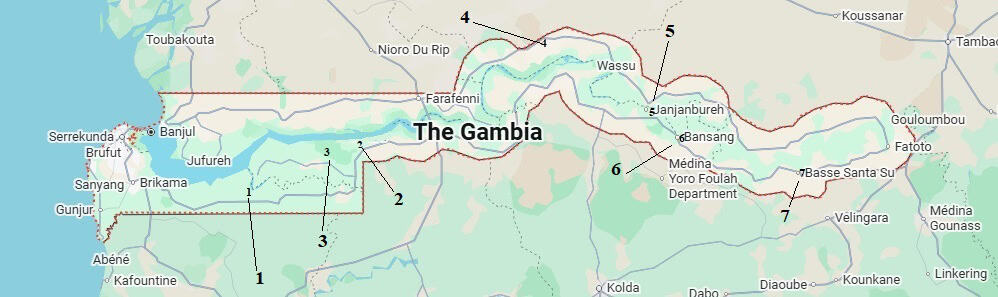
For the first stop, head to Biintang, about 50 km from Banjul, located on the Bitang Bolon, a tributary of the Gambia River. Take the South Bank Road.
There is a lodge right on the river that has bird-watching tours and other activities. See the accommodations page.
Common birds there include the Lesser Crested Tern, Greater Flamingo, Goliath Heron, Western Reef Heron, kingfishers, parrots, hornbills, finches and owls.
Second Stop
The second location could be Tendaba, on the Gambia River. Go back to the South Bank Road and drive another 50 km, then turn north at Kwinella. Like Bintang Bolan, there is a lodge at Tendaba that specialises in bird-watching tours. Look for herons and eagles, as well as mammals such as monkeys, baboons, and hippos, and the huge Nile Crocodile. If you have not yet seen the Egyptian Plover, you will get another opportunity here. Other great species to look for include the African Blue Kingfisher, Mangrove Sungird, Striated Heron, Spur-winged Goose, Yellow-billed Stork, Woolly-necked Stork, and the Blue-breasted Kingfisher. The Managrove Sunbird is not dressed in stunning colours like other sunbirds. It is plain grey and white, which is why it is also known as the Mouse-brown Sunbird. Although it is not the most beautiful bird you will see on this tour, it is worth looking for because it is found only in scattered locations from Senegal to northern Angola. Tandaba is one of the best places to see the White-backed Night Heron.
Inland from the camp, especially around the airstrip, look for Abyssinian Ground Hornbill, White-frontedBlack Chat, and White-crested Hematode. See the accommodations page.
Third Stop
The third suggested location is Kiang West National Park. This park is to the west, back toward Janbul. But the best way to get there is from Tendaba. The Tendaba Lodge organises tours to the park by boat or by 4WD truck. Birds are difficult to spot here, but the best species to look for are African Yellow White-eye, White-shouldered Black Tit, Brown Snake Eagle and Brown-necked Parrot.
Fourth Stop
For the next location, travel west on the South Bank Highway until you come to the Trans Gambia Highway at Soma. Cross the bridge to the north side of the Gambia River. Travel west on the North Bank Highway to Panchang, which is on the border with Senegal.
As there are no decent accommodations in Panchang that I know of, you need to travel back west to the Morgan Kunda Lodge at Illiassa or east to Janjanbureh. They are about the same distance from Panchang, but Janjanbureh is on an island, so you have to take a ferry, which could take too much time.
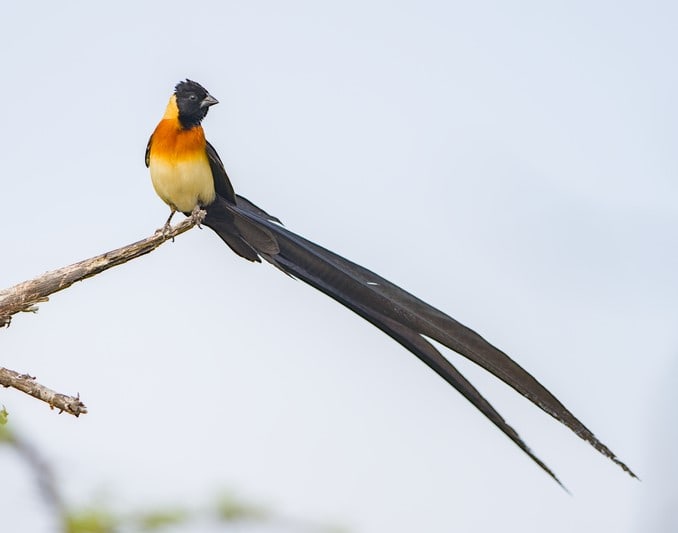
Birds to look for in the Panchang wetlands, just east of the village, include African Pygmy Goose, Lesser Moorhen, Orange-breasted Waxbill and the wonderful Exclamatory Paradise Whyday.
A little further down the highway is the Kau-ur Wetlands. This wetland is larger than the one at Penchang and attracts lots of exciting birds, including Greater Painted Snipe, White-faced Whistling Duck, Kittlitz’s Plover, and Collared Pratincoles. Also, this is the spot to look for the wonderful Egyptian Plover.
Fifth Stop
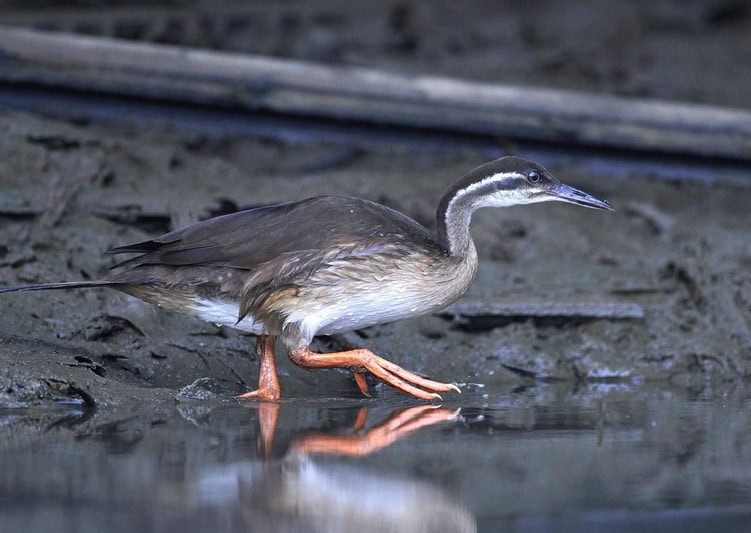
Spent a night at Janjangbureh. Here you can take a pirogue trip down the Gambia River in search of the African Finfoot, the Sining-blue Kingfisher, and the Black Coucal. Janjanbureh is on an island, but there is a ferry to cross the river.
Sixth Stop
Take another ferry and drive south until you come to the South Bank Highway. Travel east until you arrive at Bansang. The Red-throated Bee-eater has a colony at the nearby Bansang Quarry.
Seventh Stop
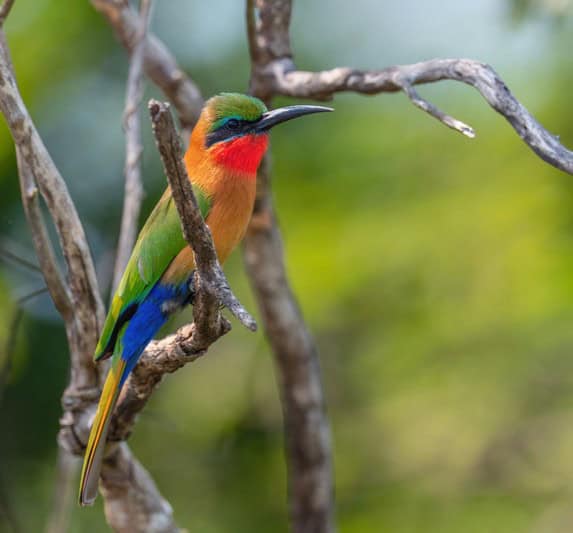
Continue east on the South Bank Highway to Basse Sanat Su. This is the best place in Gambia to look for the Northern Carmine Bee-eater. With its deep pinkish-red breast, iridescent green head and very long pointed tail, the bee-eater is more elegant than the Southern Bee-eater.
Accommodations
Accommodations in birding lodges in Gambia
Link to Accommodations in Gambia
Photo Credits
Egyptian Plover – Aidan Semmens
Red-throated Bee-eater – David Havle
Paradise Wydah – D Keats
African Finfoot – Dennis Jacobsen
(M) Write a review
You must be logged in to submit a review.